KWASU Seminar Highlights Media’s Strategic Role in Tackling Nigeria’s Insecurity:
NSCDC Urges Responsible Journalism, Stronger Collaboration Between Media and Security Agencies;
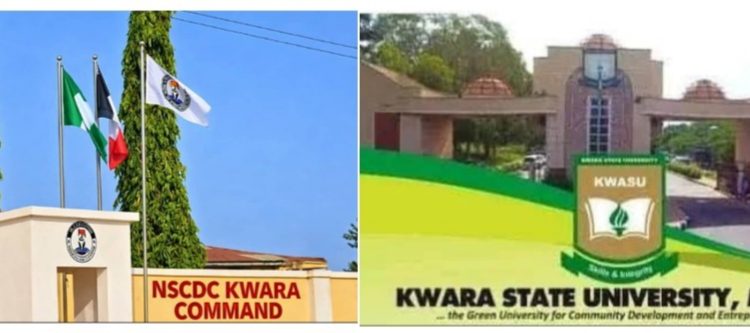
The Department of Mass Communication, Top-Up Degree Conversion Stream II, Kwara State University (KWASU), Malete, has organized a thought-provoking one-day seminar aimed at addressing the persistent security challenges confronting Nigeria while emphasizing the indispensable role of the media in promoting peace, national unity, and public safety.
The seminar, themed “Challenges of Insecurity in Nigeria and the Role of Media,” attracted students, lecturers, communication professionals, and security personnel who gathered to examine the causes of insecurity and the responsibilities of journalists in fostering a more secure society.
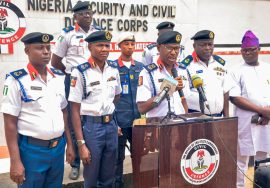
Delivering the keynote address, Officer Tiamiyu Olasunkanmi Ismaheel, SC, of the Nigeria Security and Civil Defence Corps (NSCDC), Kwara State Command, described insecurity as a major impediment to Nigeria’s socio-economic growth and sustainable development.
He identified terrorism, banditry, kidnapping, armed robbery, communal clashes, cybercrime, cultism, and the proliferation of fake news as significant threats undermining national peace and stability.
Officer Tiamiyu emphasized that the media remains one of the most influential institutions in society, capable of shaping public perception and contributing meaningfully to national security.
He urged media practitioners and aspiring journalists to embrace professionalism by verifying facts before publication, avoiding sensationalism, respecting ethical standards, and ensuring balanced reporting, particularly on sensitive security matters.
According to him, responsible journalism promotes public confidence, strengthens democratic values, and prevents the spread of misinformation capable of escalating conflicts.
He further stressed that the media should serve as a bridge between security agencies and the public by educating citizens on security awareness, encouraging prompt reporting of suspicious activities, and supporting campaigns that promote peaceful coexistence.
The NSCDC officer also called for stronger collaboration between media organizations and security agencies, noting that effective communication and information sharing remain essential tools in preventing crime and enhancing intelligence gathering.
Participants at the seminar engaged in interactive discussions on conflict-sensitive reporting, digital misinformation, ethical journalism, and the evolving responsibilities of media professionals in an era dominated by social media and instant information dissemination.
Students seized the opportunity to ask questions on crisis communication, investigative reporting, and the challenges of balancing press freedom with national security.
Speaking after the event, participants described the seminar as timely, impactful, and intellectually enriching.
They noted that the programme broadened their understanding of the media’s constitutional responsibility and reaffirmed the need for journalists to become agents of peace, accountability, and national development.
The seminar concluded with a collective call for journalists, media students, government institutions, security agencies, and members of the public to work together in combating insecurity through responsible information management, civic engagement, and adherence to ethical communication principles.
The Department of Mass Communication, Top-Up Degree Conversion Stream II, reiterated its commitment to producing competent and socially responsible media professionals equipped with the knowledge, ethics, and practical skills required to address contemporary societal challenges.